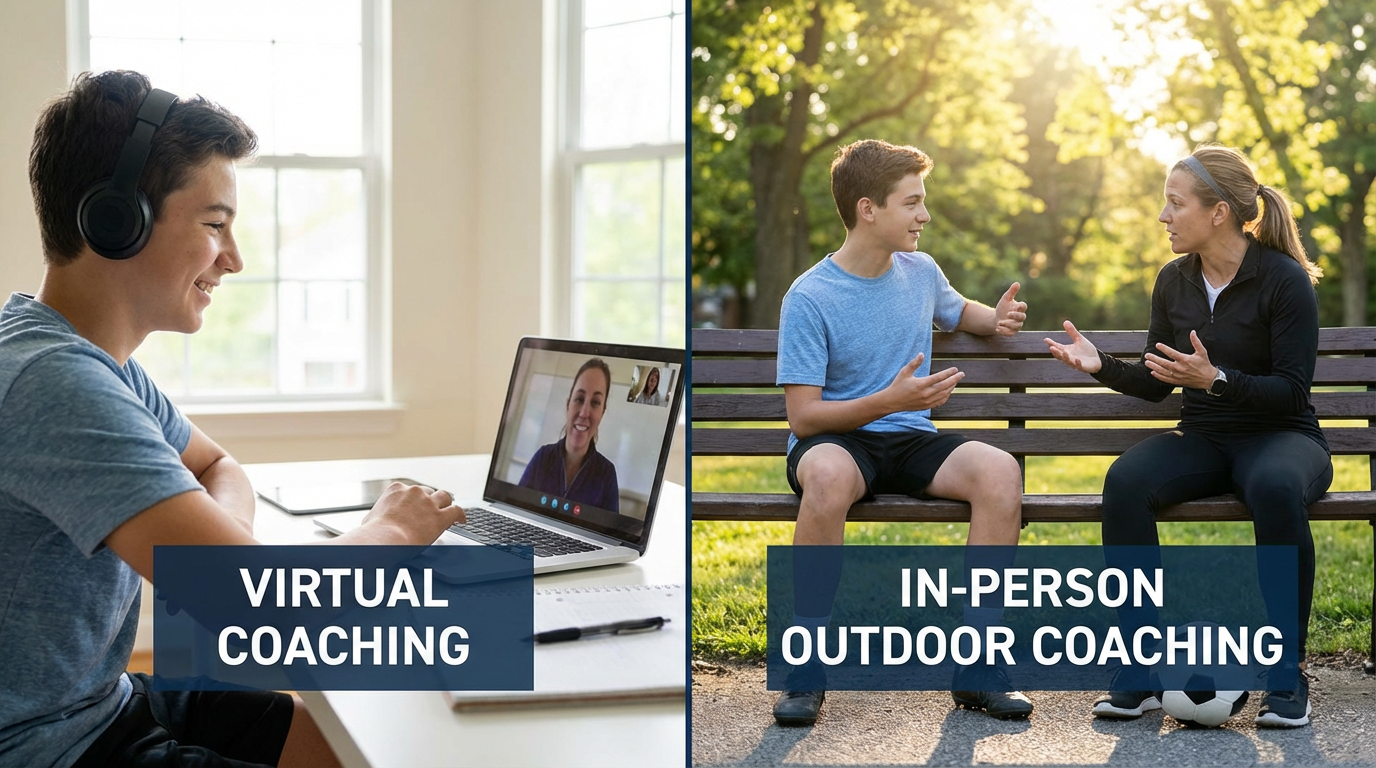
The pandemic normalized virtual everything—therapy, coaching, even support groups. But now that in-person options are back, which is better for your teen?
The answer: it depends.
Virtual Coaching: Pros and Cons
Advantages
1. Accessibility
No geographic limitations. Your teen can work with the best coach for their needs, regardless of location.
2. Convenience
No commute time. Sessions can fit into busy schedules more easily.
3. Comfort
Some teens are more open and relaxed in their own environment.
4. Consistency
Easier to maintain regular sessions when travel, weather, or logistics aren't factors.
5. Cost
Often less expensive without travel time built into fees.
Disadvantages
1. Limited Engagement
Easier to zone out, multitask, or disengage when not face-to-face.
2. Distractions
Home environment may have interruptions, noise, or lack of privacy.
3. Misses Nonverbal Cues
Body language, energy, and subtle cues are harder to read through a screen.
4. Technology Issues
Wi-Fi problems, platform glitches, and screen fatigue can interfere.
5. Less Immersive
Can't do experiential activities, adventure outings, or hands-on skill-building.
In-Person Coaching: Pros and Cons
Advantages
1. Deeper Connection
Face-to-face interaction builds rapport and trust more quickly.
2. Full Engagement
Harder to check out or multitask when you're physically present.
3. Experiential Learning
Can do adventure activities, role-playing, and hands-on skill practice.
4. Real-World Application
Coach can accompany teen to challenging situations (job interviews, social events, etc.).
5. Environmental Change
Getting out of the house creates a mental shift and signals "this is important."
Disadvantages
1. Geographic Limitations
Limited to coaches in your area, which may not include the best fit.
2. Logistics
Requires transportation, time, and coordination.
3. Cost
Often more expensive due to travel time and overhead.
4. Scheduling Challenges
Harder to find convenient times that work for everyone.
5. Barriers to Consistency
Weather, illness, car trouble, or other obstacles can disrupt sessions.
Which is Better for Your Teen?
Virtual Coaching Works Best When:
- Your teen is motivated and engaged
- They have a private, quiet space for sessions
- Logistics or distance make in-person difficult
- The focus is on talk-based coaching (goal-setting, accountability, problem-solving)
- Your teen is comfortable with technology
In-Person Coaching Works Best When:
- Your teen struggles with engagement or motivation
- They benefit from experiential or adventure-based activities
- They need real-world support (accompanying to events, practicing social skills)
- Building a strong therapeutic relationship is a priority
- Your teen is resistant to help and needs the accountability of showing up
Hybrid Approaches
Many families find a combination works best:
- Weekly virtual check-ins for accountability and planning
- Monthly in-person sessions for deeper work or experiential activities
- In-person during crises, virtual for maintenance
- Start in-person to build rapport, transition to virtual for convenience
Questions to Ask When Deciding
- What are your teen's specific needs? (Accountability, skill-building, emotional support, etc.)
- How engaged and motivated is your teen?
- What's the quality of available local coaches vs. virtual options?
- What are your logistical and financial constraints?
- What has worked (or not worked) for your teen in the past?
How Off The Couch Approaches This
We offer both virtual and in-person coaching, tailored to each teen's needs:
- In-person in LA: Full coaching services including adventure outings
- Virtual nationwide: Coaching, accountability, and skill-building via video
- Hybrid models: Combining both for maximum flexibility
- Travel coaching: In-person intensive support anywhere in the US when needed
We help families determine the best approach based on their unique situation.
Not sure whether virtual or in-person coaching is right for your teen? Let's talk through your options. Schedule a free consultation today.